
ADVERTISEMENT
Wendy’s Chili: A Beloved Classic — Origins & What’s Inside the Bowl
Few fast‑food menu items have earned the kind of enduring popularity that Wendy’s Chili has. It’s more than a side dish or a quick snack — it’s a piece of fast‑food history, a comfort‑food staple, and a surprisingly clever solution to a practical problem.
Origins: How Chili Became Part of The Menu
Wendy’s opened its first restaurant on November 15, 1969, in Columbus, Ohio — and from day one, its menu was simple but intentional. Alongside burgers, fries, soft drinks, and the signature Frosty, there was one less‑expected item: chili. Flavor365+2Mashed+2
Why chili? The company’s founder, Dave Thomas, had built Wendy’s around the principle of using fresh, never‑frozen beef. Wendy’s+2Chowhound+2 But fresh beef can’t sit in a bin for too long — so leftover cooked hamburger patties that didn’t sell would otherwise go to waste. Rather than throw the meat out, Dave Thomas and his team came up with a resourceful idea: turn the unsold but still-fresh patties into chili. Chowhound+2Click Americana+2
After many test batches and “marathon cooking sessions,” the recipe for Wendy’s Chili was finalized. Mashed+2Parade+2
The result: a fast‑food menu item that’s also a smart example of food‑waste reduction — and, over five decades later, still going strong. Wendy’s+2Chowhound+2
What’s in Wendy’s Chili? — Ingredient & Recipe Breakdown
Though recipes at fast-food chains are often treated like corporate secrets, the general composition of Wendy’s Chili is relatively well-known. Flavor365+2Cuisine Seeker+2
Here’s a simplified breakdown of its core components:
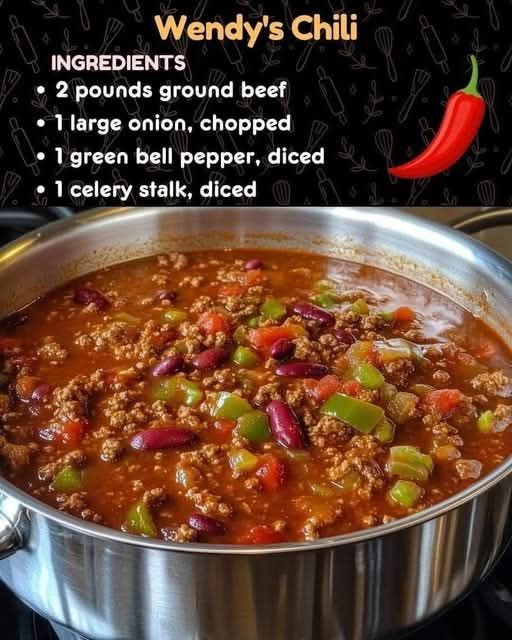
- Beef — 100% ground beef, from burger patties cooked but unsold; before entering the chili pot, the patties are chopped or crumbled, sometimes boiled to remove excess fat. Flavor365+2Parade+2
- Beans — Typically a mix of red kidney beans and pinto (or small red) beans. The beans help give the chili its hearty, filling character. Flavor365+2Flavor365+2
- Vegetables & Aromatics — Onions, celery, and green bell peppers form the aromatic base, adding flavor and texture. Flavor365+2Cuisine Seeker+2
- Tomato Base — Typically tomato sauce, tomato paste or juice, possibly diced tomatoes. This gives the chili its recognizable reddish‑brown color and a mildly tangy, comforting base. Flavor365+2food.com+2
- Seasonings & Spices — Chili powder, cumin, garlic powder, salt, sometimes a hint of heat (but far milder than some “Texas‑style” chilis), plus a touch of sweetness (sugar) to balance flavors. Flavor365+2Flavor365+2
- Liquid & Texture Agents — Water or broth plus, in commercial preparation, thickening/stabilizing agents to keep consistency — giving Wendy’s Chili its signature combination of soupy yet meaty texture. Cuisine Seeker+1
Compared with more rustic or “authentic” chili recipes (like those heavy, slow‑smoked Texas‑style stews), Wendy’s Chili isn’t extremely spicy or smoky; rather, it’s mild, savory, and designed to have broad, comforting appeal. Mashed+2Flavor365+2
Why Wendy’s Chili Works: Flavor, Practicality, and Nostalgia
Several factors contribute to the lasting success of this seemingly humble dish:
- Efficient Use of Ingredients — Turning unsold beef into chili was a smart, early example of minimizing food waste while maximizing value. Click Americana+2Allied Business Academies+2
- Consistent, Balanced Flavor — The blend of beans, vegetables, tomato, and seasoned beef hits a comforting balance: filling but not too heavy, savory but not overwhelmingly spicy, hearty but approachable.
- Accessibility & Familiarity — Since its debut in 1969, Wendy’s Chili has been served in every US location — over 50+ years of availability means multiple generations have grown up with it. Wendy’s+2Wikipédia+2
- Flexibility — It works as a quick meal, a side, a topping (e.g., chili cheese fries or chili‑topped baked potatoes), or comfort food on a cold day — giving it broad appeal beyond just a side dish. Wendy’s+2Click Americana+2
Homemade Copycat Tips: Trying to Recreate Wendy’s Chili at Home
If you want to approximate the taste of Wendy’s Chili in your own kitchen, here are some guidelines based on what’s publicly known:
For Complete Cooking STEPS Please Head On Over To Next Page Or Open button (>) and don’t forget to SHARE with your Facebook friends
- Use ground beef (browned, drained) — you can get a slightly more “authentic” flavor if you sear the meat well.
- Include a two‑bean blend (kidney + pinto) for texture variety.
- Build a base with onions, celery, green bell pepper, and tomatoes (sauce + paste / juice / diced), then simmer with chili powder, cumin, garlic powder, salt, and a bit of sugar to balance acidity.
- Let it simmer slowly to meld flavors — the signature of good chili is depth, not just spice.
- Serve warm, maybe with bread or over baked potatoes — part of the charm of Wendy’s Chili is its heartiness and comfort factor.
Note: Homemade versions may differ from the fast‑food original, because some of the texture and flavor comes from the preparation style and scale at Wendy’s.
Conclusion: A Simple Dish That Became a Legacy
Wendy’s Chili might look like a simple bowl of meat, beans, and tomato sauce — but behind it lies a story of resourcefulness, clever menu design, and a timeless recipe that’s kept many fans coming back for more than half a century.
If you’ve never tried it, or you’ve only had fast‑food versions — trying a homemade copycat recipe can offer a new appreciation for why this chili has endured. If you have eaten it, maybe you’ll now taste the layers of texture, flavor, and history in every spoonful.
ADVERTISEMENT
