
ADVERTISEMENT
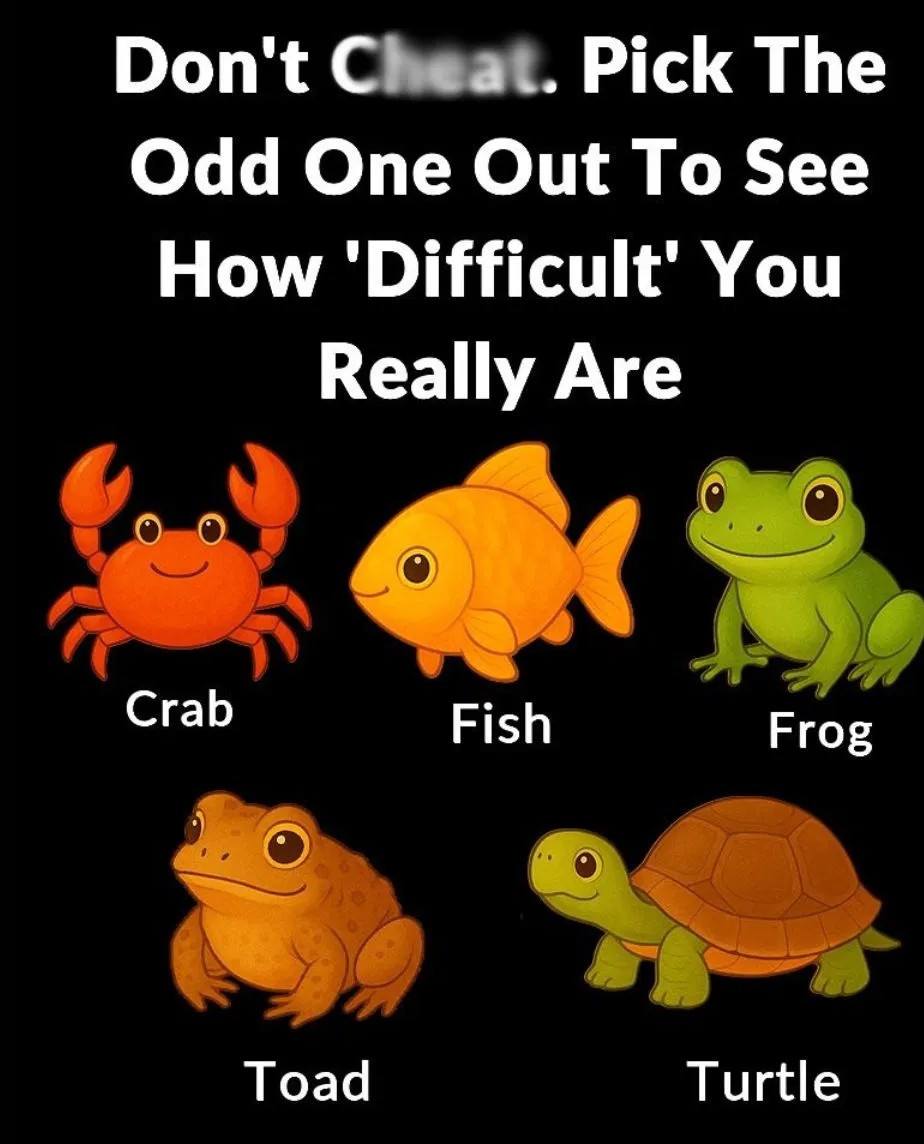
Don’t Cheat! Pick the Odd One Out to See How ‘Difficult’ You Really Are
Sometimes, the simplest-looking challenges are the ones that trick your brain the most. A favorite pastime on social media and puzzle websites is the “Odd One Out” game — a test of observation, logic, and attention to detail. But don’t be fooled: even the sharpest minds can be caught off guard!
This game isn’t just about spotting differences; it’s about how your brain processes patterns, colors, and shapes under pressure. And yes, it’s surprisingly revealing about your thinking style.
How It Works
The premise is simple: a set of images, objects, or words is presented. All but one share a common feature. Your challenge is to identify the one that doesn’t fit — the “odd one out.”
Despite its apparent simplicity, the game is trickier than it looks because:
- Some differences are subtle, like a slightly different shade, angle, or detail.
- Your brain is wired to notice familiar patterns, which can make the true odd one harder to spot.
- Pressure and the urge to “finish fast” can lead to mistakes.
Why People Love Odd One Out Puzzles
- Brain exercise: They improve visual perception and pattern recognition.
- Fun competition: It’s easy to share with friends or test yourself online.
- Stress relief: Engaging in small mental challenges can be surprisingly relaxing.
- Curiosity: People love seeing how their thinking differs from others.
Tips to Play Without Cheating
- Focus carefully: Don’t rush. Subtle differences are easy to miss.
- Look for multiple patterns: Check color, shape, orientation, and size.
- Use elimination: Start by discarding the ones that clearly match.
- Trust your instincts: Sometimes your first choice is correct.
What Your Choice Reveals About You
Believe it or not, psychologists suggest that the way you approach “Odd One Out” puzzles can say a lot about your thinking style:
- Detail-oriented: You notice small differences that others miss.
- Big-picture thinker: You spot the overall pattern quickly but might miss subtle changes.
- Impulsive: You go with your gut first, which works sometimes but not always.
- Methodical: You systematically check each possibility before deciding.
No matter the outcome, it’s a fun way to challenge your brain and see where you fall on the spectrum.
For Complete Cooking STEPS Please Head On Over To Next Page Or Open button (>) and don’t forget to SHARE with your Facebook friends
The Challenge
Ready to test yourself? A classic example:
Which one is the odd one out?
- A set of shapes: square, square, square, rectangle.
- A set of numbers: 2, 4, 6, 9.
- A set of fruits: apple, apple, apple, orange.
See? Easy? Not so fast — the real challenge is in more intricate or visual puzzles, like images that look nearly identical at first glance.
✅ Conclusion
“Odd One Out” puzzles may seem simple, but they’re a fantastic way to exercise your brain, improve observation skills, and have a little fun testing yourself.
The next time you see one online, don’t cheat — take your time, look closely, and see how “difficult” your brain really is.
ADVERTISEMENT
